6 min. read
Every month we get the same question from a museum, an NGO, or a foundation: "How do we build a game to reach younger audiences?"
It's the wrong question.
Not because the goal is wrong. Reaching young people through play is one of the smartest moves a mission-driven organisation can make in 2026. But the way the question is framed sets the project up for trouble. Building a game is the easy part. Reaching the right people, holding their attention, and showing impact is where most projects struggle.
After ten years of building educational experiences with partners like NASA, UNESCO, BBC, and the Vatican, we've seen the same pattern again and again: the projects that work are the ones that were scoped well from the start. Here's how to do that in 2026.
Step 1: Start with the behaviour you want to change
Before you talk about platforms, art styles, or budgets, get specific about what success looks like for the audience you care about.
Don't say "we want to raise awareness." Say something like: "We want 200,000 students aged 10–14 in Brazil to spend at least 30 minutes engaging with our story, and continue to talk about it at home."
That kind of clarity changes everything. It tells you the age range, the region, the time commitment, and the secondary outcome you're hoping for. Once you know that, every other decision gets easier.
If you can't describe the audience behaviour in one sentence, you're not ready to commission anything. Spend two more weeks talking to teachers, parents, and the kids themselves before moving on.

Step 2: Pick the platform your audience is already on
This is where 2026 looks very different from even two years ago.
A few years back, building a custom app was a serious option. Today it almost never is. The cost of getting young people to download a new app - let alone open it twice - has gone up sharply. Attention has consolidated onto a small number of platforms, and Minecraft is by far the biggest of them for the 7–14 age group, with hundreds of millions of monthly players worldwide.
For most museums, NGOs, and heritage organisations, the platform decision in 2026 is short:
If your audience is school-age and you want classroom adoption, Minecraft Education is almost always the right answer. It's free for teachers in many regions, IT-approved at most schools, and has built-in tools for assessment.
If you want to reach kids and families at home, you'll want to be on the Minecraft Marketplace, where players already spend money and time.
If your audience is older, or you have a specific community use case like corporate L&D or university research, the calculus is different.
Picking a platform first feels like skipping ahead. It isn't. It's accepting that your audience has already chosen where they want to be.
Step 3: Decide what shape the project takes
Once the platform is set, you have three rough options:
A standalone world. A self-contained experience players download and explore. Good for big stories, like restoring St. Peter's Basilica or recreating an extinct ecosystem.
An add-on or DLC. Content that drops into a player's existing game. Lower friction, but the experience has to fit Minecraft's existing language.
A campaign. A coordinated push that combines a world or add-on with classroom resources, social content, and a release moment.
Most strong projects in 2026 are some mix of all three. A world alone, without distribution and classroom support, will get a soft launch and quietly fade. A campaign without a real piece of content at the centre is just marketing.
Be honest about which one you can support. A small organisation with no marketing team might be better served by a focused world that lives long-term in Minecraft Education, rather than a big campaign it can't sustain.
Step 4: Budget for three things, not one
Here's the most common scoping mistake we see: organisations budget for the build and forget everything else.
A realistic 2026 budget covers three buckets:
Content — the actual game, world, or add-on. This is what most people mean by "the budget."
Distribution & Promotion — getting the experience in front of your audience. Trailer, social campaign, partner amplification, classroom toolkits. This is often 20–40% of the build budget.
Measurement — tracking what happened after launch. Download data, engagement time, learning outcomes when relevant. Plan it before you build, not after.
If you only fund the first bucket, you'll launch a beautifully built experience that almost no one finds. We've watched this happen often enough to know it's the single biggest predictor of disappointment.
Step 5: Plan for the long tail
Most game-based projects look a lot like a press release: a launch peak, followed by a quiet decline. That's the campaign model, and it's the wrong shape for mission-driven work.
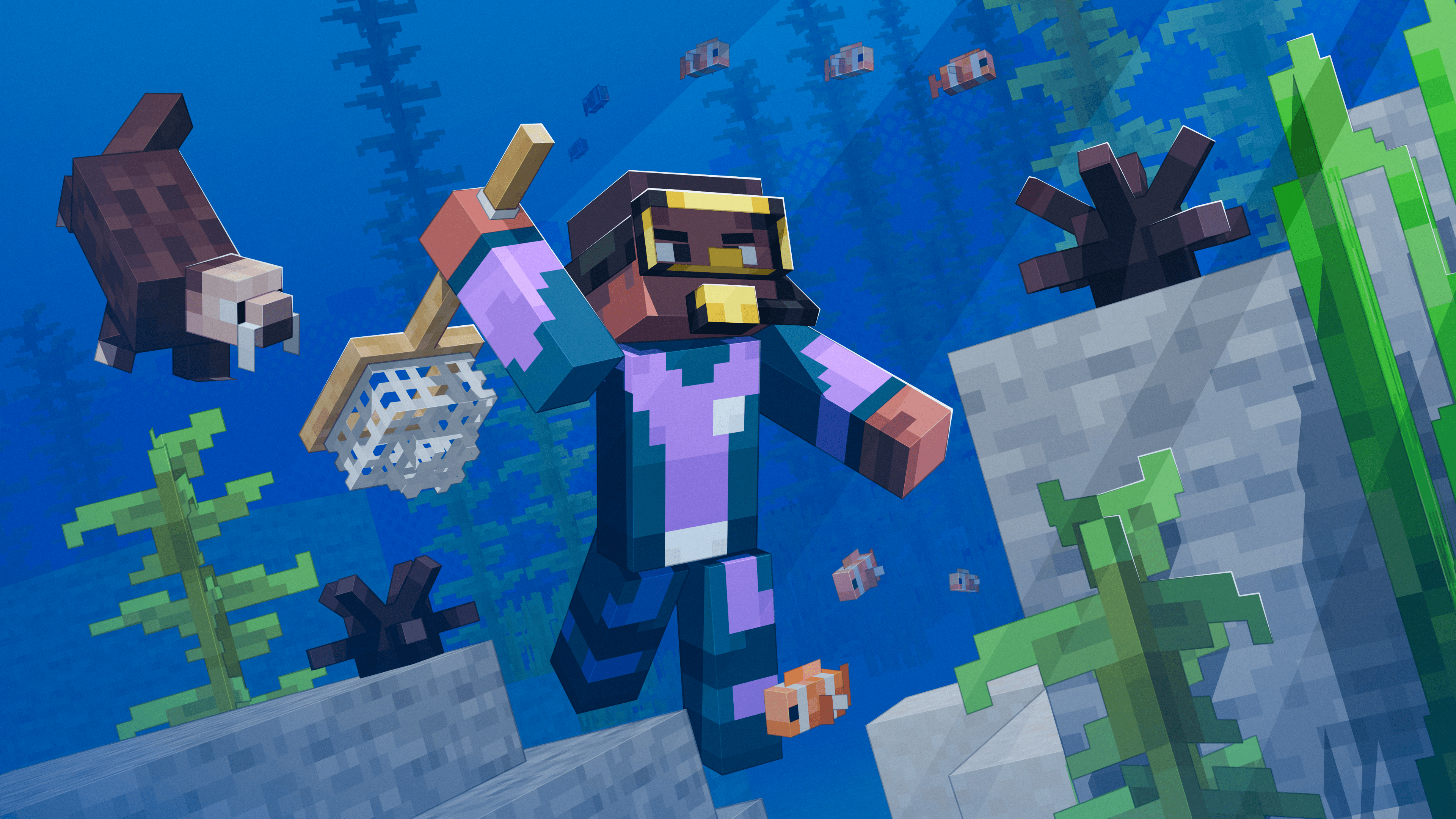
The projects that have the biggest impact treat the launch as the start, not the end. Ocean Heroes passed two million players almost a year after release, not at launch. Frozen Planet II has been used in classrooms for four years.
Plan for at least 12 months of light post-launch activity: small content updates, classroom partnerships, social campaigns tied to relevant moments (Earth Day, World Oceans Day, the start of school terms). It costs a fraction of the original build, but it multiplies the impact.
Common mistakes to avoid
A few patterns we see often:
Designing for adults instead of kids. If your stakeholders are happy but no 11-year-old wants to play it, the project failed. Test with the actual audience early.
Overloading with educational content. A great learning experience teaches one or two things really well, not twenty things lightly.
Ignoring IT and privacy questions. School IT teams will block any platform that raises flags. Pick one (Minecraft Education in most cases) that already has the certifications.
Picking a build partner on price alone. Distribution, measurement, and post-launch support matter more than the lowest quote.
Where to start
If you're at the very beginning, write a single page that answers four questions: who is the audience, what do you want them to do, what platform are they on, and how will you measure success. If you can answer all four clearly, you're ready to talk to a build partner. If you can't, that's the work to do first.
The organisations that get this right in 2026 won't be the ones with the biggest budgets. They'll be the ones who scoped well at the start.